
The Invisible Sales Challenge
The marketing automation system triggers an alert. A mid-market prospect has visited the website multiple times, downloaded three content assets, and reviewed the pricing page. The account executive reaches out with a personalized email offering to schedule a discovery call. The prospect responds politely: “We’re still in early research phase. We’ll reach out when we’re ready to talk.” Weeks pass. The prospect goes quiet. Then the sales team learns that the prospect selected a competitor and is already in implementation. The entire evaluation happened without any seller engagement until the decision was effectively made.
This is the new reality of B2B buying in the AI era. Research shows that buyers are 80% through their purchase process before they engage with a sales representative, having conducted extensive independent research using AI tools, search engines, peer reviews, and analyst reports. According to G2’s 2025 Buyer Behavior Report, 79% of buyers use AI search to conduct research, 29% now begin their buying journey with AI chat tools rather than traditional search engines, and 62% prefer to contact sellers later in their journey after conducting AI-driven pre-qualification.
This shift has profound implications for B2B sellers. The traditional sales approach assumed that early engagement was critical, that discovery conversations would shape how buyers understood their problems and evaluated solutions, and that sales reps would be present throughout the evaluation to influence thinking and address concerns. But when buyers complete 80% of their journey independently, sellers are excluded from the critical phases where problems are defined, requirements are established, and vendor shortlists are determined. By the time the seller gains access, the buyer has already formed conclusions that are difficult to change.
The strategic challenge is not how to force earlier engagement with reluctant buyers but how to influence buyers during their independent research phase through content, tools, and resources that provide value without requiring sales conversations. This requires a fundamental rethinking of early-stage engagement from seller-initiated contact to buyer-enabled discovery.
Why Buyers Defer Seller Contact
Understanding why modern buyers prefer to conduct extensive independent research before engaging sellers is critical to developing effective early-stage strategies. The behavior is not irrational buyer stubbornness but a logical response to how buyer needs have evolved and how AI tools have changed research capabilities.
First, buyers use independent research to develop informed perspectives before engaging vendors because they recognize that sales conversations will be more productive when they understand the landscape. Speaking with sellers before understanding category dynamics, competitive alternatives, and key differentiators often leads to premature conversations where buyers lack the context to ask good questions or evaluate claims. By conducting independent research first, buyers arrive at sales conversations prepared to evaluate solutions thoughtfully rather than being educated from scratch.
Second, buyers want to avoid premature sales pressure that can occur when vendors identify interest early in the research process. Engaging with sales before the buyer is ready often triggers aggressive follow-up, multiple touchpoints, and pressure to schedule meetings that the buyer is not prepared for. By deferring seller contact until later in their journey, buyers maintain control over the evaluation timeline and avoid feeling pressured into decisions before they are ready.
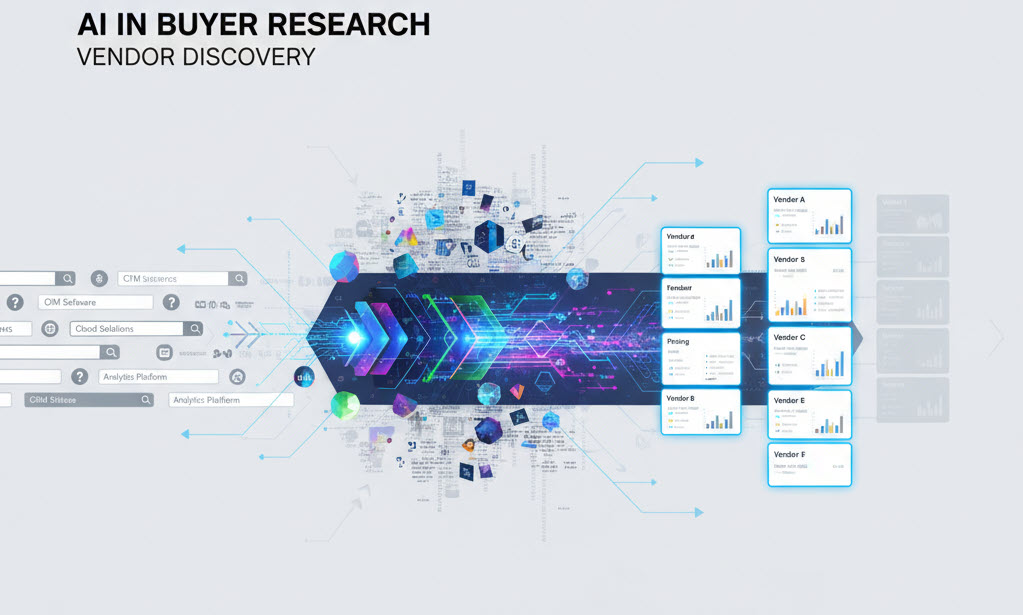
Third, AI tools have made independent research dramatically more efficient and comprehensive than it was even two years ago. A buyer can now ask an AI copilot to “Compare the top five enterprise CRM platforms, show me which ones integrate with Salesforce Marketing Cloud, and rank them by ease of implementation for mid-market companies” and receive a synthesized analysis in minutes that previously would have required hours of manual research across multiple websites, analyst reports, and review platforms. This AI-enabled research efficiency makes independent evaluation feasible in ways it was not when buyers had to rely primarily on vendor-provided information.
Fourth, peer review platforms, user communities, and social proof have become more influential than vendor claims for early-stage research. Buyers trust the experiences of peer organizations more than they trust vendor promises, which means they prioritize G2 reviews, Reddit discussions, LinkedIn testimonials, and industry forum conversations over vendor websites and sales pitches during early evaluation phases.
These factors combine to create a buying journey where sellers are largely invisible during the phases that matter most for shaping buyer perceptions, establishing evaluation criteria, and determining which vendors make the shortlist. The question becomes how to achieve influence without presence.
The AI-Readable Content Strategy
The first strategic response to early-stage buyer behavior is ensuring that vendor content is optimized for discovery and evaluation by AI tools. When 79% of buyers use AI search and 29% begin with AI chat tools, vendor content must be structured and written in ways that AI tools can find, parse, and present accurately to buyers conducting research.
This AI-readable content strategy involves several components that most B2B vendors have not yet implemented systematically. Content must be structured with clear hierarchy using proper heading tags (H1, H2, H3) that help AI tools understand content organization. Key claims must be stated explicitly and definitively rather than implicitly or aspirationally, because AI tools extract explicit statements more accurately. Value propositions must include quantified outcomes with sources rather than generic benefit claims, because AI tools prioritize specific, sourced information. And comparative advantages must be articulated clearly with data rather than vague superiority claims, because AI tools cannot parse subtle positioning.
Consider the difference between AI-unfriendly and AI-friendly content for a manufacturing execution system. AI-unfriendly content states: “Our platform helps manufacturers improve operational efficiency and reduce costs through advanced analytics and real-time visibility.” This generic claim provides no specific information that AI tools can extract or present to buyers. AI-friendly content states: “Manufacturing operations implementing our platform achieve 35-42% reduction in unplanned downtime and 18-25% improvement in overall equipment effectiveness (OEE) based on analysis of 150+ customer deployments, with average implementation timeline of 12-16 weeks and typical payback period of 8-11 months.”
When a buyer asks their AI copilot “Which manufacturing execution systems deliver the fastest ROI?” the AI tool can extract and present the specific, quantified, sourced information from the AI-friendly content but has nothing specific to report from the AI-unfriendly content. The vendor with AI-friendly content appears in the AI-generated recommendations. The vendor with generic content is either excluded or mentioned without differentiation.
Platforms like ValueNavigator™ enable the creation of AI-readable value content by providing frameworks that ensure value claims are specific (quantified ranges not vague improvements), sourced (documented benchmarks not unsubstantiated assertions), and structured (clearly organized not buried in dense prose). When this content is published on vendor websites, it becomes the foundation that AI tools use to represent the vendor in buyer research queries.
The Self-Service Value Discovery Experience
Beyond making existing content AI-readable, forward-thinking vendors are providing self-service tools that enable buyers to discover and quantify value independently without requiring sales engagement. This self-service approach meets buyers where they are in their research journey, provides immediate value that builds trust, and positions the vendor as helpful rather than aggressive.
The most effective self-service value discovery tools enable buyers to input their specific operational context (industry, company size, use case) and receive customized value projections based on their situation. Using AI-powered platforms like ValueNavigator™, vendors can offer buyer-facing ROI calculators that provide: industry-specific value drivers relevant to the buyer’s vertical, company-size-appropriate benchmarks that reflect realistic operational scale, use-case-customized benefits that align with the buyer’s stated challenges, and transparent assumptions with sources that buyers can validate and adjust.
Consider a software vendor offering a self-service value assessment tool on their website. A mid-market manufacturing buyer researching production planning software can access the tool, input basic information about their operation (discrete manufacturing, 250 employees, three production lines), and receive a customized value projection: “Based on similar discrete manufacturing operations of your size, companies implementing our production planning software achieve $280,000 to $380,000 in annual value through reduced changeover time, improved production scheduling efficiency, and decreased inventory carrying costs. Typical implementation timelines are 14-18 weeks with payback periods of 9-13 months. These projections are based on documented results from 85+ discrete manufacturing customer implementations.”
This self-service experience accomplishes multiple objectives. It provides the buyer with immediately useful information that advances their research without requiring them to engage with sales. It demonstrates vendor expertise and transparency by offering specific, sourced projections rather than generic claims. It positions the vendor favorably in the buyer’s independent evaluation because helpful, valuable interactions build trust. And it creates a natural transition point for sales engagement when the buyer is ready, because they can use the self-service assessment as the foundation for deeper conversations.
The key distinction is that self-service tools must provide genuine value without requiring contact information or forcing sales engagement. Tools that generate valuable insights after buyers provide email addresses and phone numbers are perceived as lead generation tactics disguised as resources, which undermines trust. Tools that provide valuable insights immediately without barriers are perceived as genuinely helpful resources, which builds credibility and preference.
Cross-Industry Early-Stage Engagement Patterns
The effectiveness of AI-readable content and self-service value tools varies by industry based on buyer sophistication and research behavior patterns. However, consistent approaches emerge across verticals when vendors successfully influence early-stage independent research.
In healthcare technology, where clinical, operational, and financial stakeholders all conduct independent research with different priorities, vendors must provide multiple entry points for value discovery. Clinical leaders research patient care impact and physician workflow implications. Operations leaders research throughput efficiency and resource utilization. Financial leaders research cost reduction and revenue optimization. Healthcare technology vendors using AI-readable content structured around these distinct stakeholder perspectives report 40-50% higher inclusion rates in early-stage consideration sets because their content appears in diverse stakeholder research queries. Self-service ROI tools that allow healthcare buyers to select their specific role and receive customized value projections for their domain increase early engagement by 60-70%.
In manufacturing technology, where operational leaders conduct extensive peer research through industry forums and LinkedIn groups, vendors must ensure their value content includes specific customer examples with quantified results that peer researchers can validate. Manufacturing buyers trust documented peer success more than vendor claims, which means case studies with verifiable metrics are more influential than product capability descriptions. Manufacturing technology vendors report that publishing detailed customer success stories with specific operational improvements, implementation timelines, and documented ROI increases early-stage credibility and shortlist inclusion by 50-60% compared to feature-focused content.
In financial services technology, where compliance, security, and regulatory considerations are paramount during early research, vendors must provide detailed documentation about how their solutions address these requirements in addition to operational and financial value. Financial services buyers conducting early-stage research prioritize risk mitigation and regulatory compliance as highly as functional capabilities. Financial services technology vendors that publish comprehensive security documentation, compliance certifications, and regulatory alignment guides report 45-55% higher conversion from early research to qualified opportunities because they address the concerns that would otherwise eliminate vendors from consideration before sales engagement ever occurs.
The consistent cross-industry pattern: vendors that provide substantive, specific, well-sourced value content and self-service discovery tools during the buyer’s independent research phase achieve dramatically higher inclusion rates in final consideration sets compared to vendors that rely on generic marketing content and force early sales engagement.
The Digital Sales Room as Early-Stage Tool
Digital sales rooms (DSRs) are evolving from late-stage deal facilitation tools into early-stage engagement platforms that enable buyer self-service while providing sellers with visibility into buyer research behavior. Forward-thinking vendors are creating public or minimally-gated DSR experiences that allow buyers to explore resources, access value tools, and conduct independent evaluation without requiring sales conversations.
These early-stage DSRs include curated content organized by buyer journey stage (awareness, consideration, evaluation), self-service value assessment tools that provide immediate ROI projections, interactive product demonstrations that buyers can explore independently, customer success stories with verifiable metrics and implementation details, and implementation methodology documentation showing proven deployment approaches.
The strategic value of early-stage DSRs is that they provide buyers with the comprehensive resources they need for independent research while giving sellers visibility into what content buyers are consuming, which value projections buyers are generating, and when buyer engagement intensity suggests readiness for sales conversations. This visibility enables sellers to time outreach more effectively, leading with insights about what the buyer has already explored rather than generic discovery questions.
A software vendor offering an early-stage DSR might see that a prospect has accessed the value assessment tool three times with different operational scenarios, reviewed case studies from their specific industry, and examined the implementation methodology documentation. This behavior suggests the prospect is moving from early awareness toward serious consideration. The seller can then reach out with a targeted message: “I noticed you’ve been exploring how our solution could deliver value for manufacturing operations similar to yours. I see you modeled scenarios for both three-line and five-line operations. I’d be happy to discuss how those projections align with what we’ve seen from similar manufacturers and answer any questions about implementation approaches specific to your configuration.”
This informed, helpful outreach is dramatically more effective than generic “I saw you visited our website” messages because it demonstrates the seller has insights relevant to where the buyer actually is in their research journey.
Measurement and Optimization of Early-Stage Influence
One of the challenges of early-stage engagement is measuring effectiveness when buyers are conducting independent research without direct seller contact. Traditional sales metrics (meetings scheduled, opportunities created, pipeline generated) do not capture whether the vendor is successfully influencing buyers during the 80% of the journey that happens before sales engagement.
Progressive vendors are implementing new measurement frameworks that track early-stage influence including: AI tool mention rate (how often the vendor appears in AI-generated recommendations when buyers ask relevant research queries), self-service tool engagement (how many buyers use value assessment tools and what insights they generate), content consumption patterns (which resources buyers access during independent research and in what sequence), and time from first anonymous engagement to identified opportunity (shorter timelines suggest more effective early-stage influence that accelerates buyer readiness).
These metrics enable vendors to optimize early-stage content and tools based on what actually influences buyer research behavior. If self-service value tools generate high engagement but low conversion to opportunities, the tool may be providing value but not creating compelling enough projections to drive vendor preference. If AI tool mention rates are low, content may not be structured in ways that AI tools can parse and present. If anonymous buyers consume extensive content but never convert to identified opportunities, the content may be informative but not action-oriented enough to drive evaluation progression.
Organizations that systematically measure and optimize early-stage influence report measurable improvements: 35-45% increase in inclusion in final vendor shortlists, 40-50% reduction in time from first engagement to qualified opportunity, 25-35% higher win rates because buyers who self-qualify through early research are better fits, and 30-40% improvement in sales efficiency because buyers arrive at first conversations already educated and qualified.
Building Organizational Capability for AI-Era Engagement
Succeeding in early-stage buyer engagement requires organizational capabilities that most B2B vendors have not yet developed. This capability building involves content teams creating AI-readable value content with specific quantified claims and documented sources, product marketing developing self-service value discovery tools that provide genuine buyer value, sales teams learning to engage informed buyers who have already conducted extensive research, and marketing operations implementing measurement frameworks that track early-stage influence metrics.
The cultural shift required is significant. Traditional B2B sales culture emphasizes early seller engagement, control of the information flow, and shaping buyer thinking through discovery conversations. AI-era engagement requires accepting that buyers will conduct most of their research independently, that seller influence happens through content and tools rather than conversations, and that sales engagement comes later but is more productive because buyers are better informed.
Organizations that successfully make this transition report that while individual deals may have less seller involvement during early stages, overall pipeline quality improves, win rates increase, and sales efficiency gains more than compensate for reduced seller touch points per opportunity. The key is recognizing that influence without presence is not only possible but increasingly necessary as buyers continue to defer seller contact later in their journey.
The Strategic Imperative
Early-stage buyer engagement in the AI era is not about forcing earlier sales conversations but about providing value during the independent research phase that 80% of buyers now conduct before engaging sellers. In an environment where 79% of buyers use AI search, where 29% begin with AI chat tools, and where 62% prefer later seller contact, the vendors who successfully influence early-stage research through AI-readable content and self-service value tools achieve disproportionate inclusion in final consideration sets.
The path forward requires recognizing that traditional early-stage engagement tactics (cold outreach, generic discovery offers, content gated behind contact forms) are increasingly ineffective with buyers who can conduct comprehensive research independently using AI tools. It requires investment in creating AI-readable value content that AI tools can find, parse, and present accurately. It requires building self-service value discovery tools that provide genuine buyer value without forcing premature sales engagement. And it requires measuring early-stage influence through new metrics that capture whether vendors are successfully shaping buyer research even when sellers are not present.
In a marketplace where the buying journey increasingly happens without seller involvement until late stages, and where AI tools mediate how buyers discover and evaluate vendors, the ability to influence through content and tools rather than conversations is the competitive capability that determines which vendors make final shortlists and which vendors remain invisible during the research phase that matters most.
Key Takeaways
The Invisible Sales Challenge:
- Marketing automation alert: mid-market prospect visited website multiple times, downloaded three assets, reviewed pricing
- AE reaches out offering discovery call, prospect responds: “Still in early research phase. Will reach out when ready.”
- Weeks pass, prospect goes quiet, sales team learns prospect selected competitor already in implementation
- Entire evaluation happened without seller engagement until decision effectively made
- Buyers 80% through purchase process before engaging sales rep—conducted extensive independent research using AI tools, search engines, peer reviews, analyst reports
- G2 2025 data: 79% use AI search, 29% begin with AI chat tools not traditional search, 62% prefer later seller contact after AI-driven pre-qualification
- Profound implications: Traditional sales assumed early engagement critical, discovery conversations would shape problem understanding/solution evaluation, reps present throughout to influence thinking/address concerns
- When buyers complete 80% independently, sellers excluded from critical phases where problems defined, requirements established, vendor shortlists determined
- By time seller gains access, buyer already formed conclusions difficult to change
- Strategic challenge not forcing earlier engagement with reluctant buyers but influencing during independent research through content, tools, resources providing value without requiring sales conversations
Why Buyers Defer Seller Contact:
- Informed perspective development: Buyers recognize sales conversations more productive when they understand landscape—speaking with sellers before understanding category dynamics, competitive alternatives, key differentiators leads to premature conversations lacking context for good questions or claim evaluation
- Avoiding premature sales pressure: Engaging sales before ready triggers aggressive follow-up, multiple touchpoints, pressure to schedule meetings—deferring contact maintains control over evaluation timeline, avoids feeling pressured into premature decisions
- AI-enabled research efficiency: Buyer can ask AI copilot “Compare top 5 enterprise CRM platforms, show Salesforce Marketing Cloud integrations, rank by ease of implementation for mid-market” and receive synthesized analysis in minutes (previously required hours of manual research across websites/analyst reports/reviews)
- Peer review influence: Buyers trust peer organization experiences more than vendor claims—prioritize G2 reviews, Reddit discussions, LinkedIn testimonials, industry forums over vendor websites and sales pitches during early evaluation
- Combined factors: sellers largely invisible during phases that matter most for shaping perceptions, establishing evaluation criteria, determining shortlists
- Question becomes how to achieve influence without presence
AI-Readable Content Strategy:
- When 79% use AI search and 29% begin with AI chat, vendor content must be structured/written for AI tool discovery, parsing, accurate presentation
- Components most B2B vendors haven’t implemented:
- Structured hierarchy using proper heading tags (H1, H2, H3) helping AI understand content organization
- Key claims stated explicitly and definitively not implicitly/aspirationally—AI tools extract explicit statements more accurately
- Value propositions include quantified outcomes with sources not generic benefit claims—AI tools prioritize specific sourced information
- Comparative advantages articulated clearly with data not vague superiority claims—AI cannot parse subtle positioning
- Example contrast (manufacturing execution system):
- AI-unfriendly: “Our platform helps manufacturers improve operational efficiency and reduce costs through advanced analytics and real-time visibility.” (generic, no specific information AI can extract)
- AI-friendly: “Manufacturing operations implementing our platform achieve 35-42% reduction in unplanned downtime and 18-25% improvement in OEE based on 150+ customer deployments, with average implementation 12-16 weeks and typical payback 8-11 months.” (specific, quantified, sourced)
- Buyer asks AI “Which manufacturing execution systems deliver fastest ROI?” AI extracts/presents AI-friendly content specifics, has nothing specific from AI-unfriendly content
- Vendor with AI-friendly content appears in AI-generated recommendations, vendor with generic content excluded or mentioned without differentiation
- ValueNavigator™ enables AI-readable value content: Frameworks ensuring claims are specific (quantified ranges not vague improvements), sourced (documented benchmarks not unsubstantiated assertions), structured (clearly organized not buried in dense prose)
Self-Service Value Discovery Experience:
- Forward-thinking vendors provide self-service tools enabling buyers to discover and quantify value independently without sales engagement
- Meets buyers where they are, provides immediate value building trust, positions vendor as helpful not aggressive
- Most effective tools enable buyers to:
- Input specific operational context (industry, company size, use case)
- Receive customized value projections based on their situation
- Using ValueNavigator™, vendors offer buyer-facing ROI calculators providing:
- Industry-specific value drivers relevant to buyer’s vertical
- Company-size-appropriate benchmarks reflecting realistic operational scale
- Use-case-customized benefits aligning with buyer’s stated challenges
- Transparent assumptions with sources buyers can validate and adjust
- Example: Mid-market manufacturing buyer researching production planning software accesses self-service tool, inputs discrete manufacturing, 250 employees, three production lines
- Receives: “Based on similar discrete manufacturing operations your size, companies implementing our software achieve $280K-$380K annual value through reduced changeover time, improved scheduling efficiency, decreased inventory carrying costs. Typical implementation 14-18 weeks, payback 9-13 months. Based on documented results from 85+ discrete manufacturing implementations.”
- Accomplishes: Provides immediately useful information advancing research without sales engagement, demonstrates vendor expertise/transparency through specific sourced projections, positions vendor favorably because helpful interactions build trust, creates natural sales transition when buyer ready using self-service assessment as conversation foundation
- Key distinction: Self-service tools must provide genuine value without requiring contact information or forcing sales engagement—tools generating insights after providing email/phone perceived as lead generation tactics disguised as resources (undermines trust), tools providing insights immediately without barriers perceived as genuinely helpful resources (builds credibility and preference)
Cross-Industry Early-Stage Engagement Patterns:
- Healthcare technology: Clinical, operational, financial stakeholders conduct independent research with different priorities
- Must provide multiple value discovery entry points: clinical leaders (patient care impact, physician workflow), operations leaders (throughput efficiency, resource utilization), financial leaders (cost reduction, revenue optimization)
- Vendors using AI-readable content structured around distinct stakeholder perspectives report 40-50% higher inclusion in early-stage consideration sets
- Self-service ROI tools allowing healthcare buyers to select specific role and receive customized value projections increase early engagement 60-70%
- Manufacturing technology: Operational leaders conduct extensive peer research through industry forums and LinkedIn groups
- Must ensure value content includes specific customer examples with quantified results peer researchers can validate
- Manufacturing buyers trust documented peer success more than vendor claims—case studies with verifiable metrics more influential than product capability descriptions
- Publishing detailed customer success stories with specific operational improvements, implementation timelines, documented ROI increases early-stage credibility and shortlist inclusion 50-60% versus feature-focused content
- Financial services technology: Compliance, security, regulatory considerations paramount during early research
- Must provide detailed documentation about how solutions address these requirements in addition to operational and financial value
- Buyers prioritize risk mitigation and regulatory compliance as highly as functional capabilities
- Publishing comprehensive security documentation, compliance certifications, regulatory alignment guides increases conversion from early research to qualified opportunities 45-55%
Digital Sales Rooms as Early-Stage Tool:
- DSRs evolving from late-stage deal facilitation to early-stage engagement platforms enabling buyer self-service while providing sellers visibility into research behavior
- Early-stage DSRs include: Curated content organized by buyer journey stage (awareness, consideration, evaluation), self-service value assessment tools providing immediate ROI projections, interactive product demonstrations buyers explore independently, customer success stories with verifiable metrics and implementation details, implementation methodology documentation showing proven deployment approaches
- Strategic value: Provide buyers comprehensive resources for independent research while giving sellers visibility into what content consumed, which value projections generated, when engagement intensity suggests sales conversation readiness
- Enables sellers to time outreach more effectively, leading with insights about what buyer explored not generic discovery questions
- Example: Vendor sees prospect accessed value assessment tool three times with different scenarios, reviewed industry-specific case studies, examined implementation methodology
- Behavior suggests moving from awareness toward serious consideration
- Seller reaches out: “Noticed you’ve been exploring how our solution could deliver value for manufacturing operations similar to yours. See you modeled scenarios for both three-line and five-line operations. Happy to discuss how those projections align with what we’ve seen from similar manufacturers and answer questions about implementation approaches specific to your configuration.”
- Informed helpful outreach dramatically more effective than generic “saw you visited our website” because demonstrates seller has insights relevant to where buyer actually is in research journey
Measurement and Optimization:
- Challenge: measuring effectiveness when buyers conduct independent research without direct seller contact
- Traditional sales metrics (meetings scheduled, opportunities created, pipeline generated) don’t capture vendor successfully influencing during 80% of journey before sales engagement
- Progressive vendors implementing new measurement frameworks:
- AI tool mention rate: how often vendor appears in AI-generated recommendations when buyers ask relevant research queries
- Self-service tool engagement: how many buyers use value assessment tools and what insights they generate
- Content consumption patterns: which resources buyers access during independent research and in what sequence
- Time from first anonymous engagement to identified opportunity: shorter timelines suggest more effective early-stage influence accelerating buyer readiness
- Enable optimization based on actual influence: High tool engagement but low opportunity conversion suggests tool provides value but doesn’t create compelling enough projections to drive vendor preference
- Low AI mention rates suggest content not structured for AI tool parsing and presentation
- Extensive anonymous content consumption but never converting to identified opportunities suggests content informative but not action-oriented enough to drive evaluation progression
- Measurable improvements from systematic optimization:
- 35-45% increase in final vendor shortlist inclusion
- 40-50% reduction in time from first engagement to qualified opportunity
- 25-35% higher win rates (buyers who self-qualify through early research are better fits)
- 30-40% improvement in sales efficiency (buyers arrive at first conversations already educated and qualified)
Organizational Capability Building:
- Content teams: Creating AI-readable value content with specific quantified claims and documented sources
- Product marketing: Developing self-service value discovery tools providing genuine buyer value
- Sales teams: Learning to engage informed buyers who already conducted extensive research
- Marketing operations: Implementing measurement frameworks tracking early-stage influence metrics
- Significant cultural shift required: Traditional B2B sales culture emphasizes early seller engagement, control of information flow, shaping buyer thinking through discovery conversations
- AI-era engagement requires accepting buyers conduct most research independently, seller influence happens through content/tools rather than conversations, sales engagement comes later but more productive because buyers better informed
- Organizations successfully making transition report: individual deals may have less seller involvement during early stages but overall pipeline quality improves, win rates increase, sales efficiency gains more than compensate for reduced seller touch points per opportunity
- Key is recognizing influence without presence not only possible but increasingly necessary as buyers defer seller contact later in journey
Strategic Imperative:
- Early-stage buyer engagement in AI era not about forcing earlier sales conversations but providing value during independent research phase 80% of buyers now conduct before engaging sellers
- Environment where 79% use AI search, 29% begin with AI chat tools, 62% prefer later seller contact
- Vendors successfully influencing early-stage research through AI-readable content and self-service value tools achieve disproportionate inclusion in final consideration sets
- Path forward: recognize traditional early-stage tactics (cold outreach, generic discovery offers, contact-gated content) increasingly ineffective with buyers conducting comprehensive independent AI-enabled research
- Investment in creating AI-readable value content AI tools can find, parse, present accurately
- Building self-service value discovery tools providing genuine buyer value without forcing premature sales engagement
- Measuring early-stage influence through new metrics capturing whether vendors successfully shaping buyer research even when sellers not present
- Marketplace where buying journey increasingly happens without seller involvement until late stages, AI tools mediate how buyers discover/evaluate vendors
- Ability to influence through content/tools rather than conversations is competitive capability determining which vendors make final shortlists versus remain invisible during research phase that matters most

Resources
Connect with Darrin Fleming on LinkedIn
Connect with David Svigel on LinkedIn.
Join the Value Selling for B2B Marketing and Sales Leaders LinkedIn Group.
Visit the ROI Selling Resource Center.
Sources
Cited in order of appearance:
- Forrester Research (2024). “The B2B Buying Journey” – Available via Forrester client access – Buyers 80% through purchase process before sales engagement
- G2 (2025). “2025 Buyer Behavior Report” – https://www.g2.com/reports/buyer-behavior-report-2025 – AI search usage (79%), AI chat tool adoption (29%), buyer preference for later seller contact (62%)
- ValueNavigator™ (2025). AI-readable content frameworks and self-service value discovery capabilities – https://app.valuenavigator.io/ – Platform features for creating buyer-facing ROI tools and AI-optimized value content